
Opioid Addiction Treatment in Scottsdale, AZ
It usually doesn’t start with heroin. It starts with a prescription after surgery, an injury, or a season you were just trying to get through — and then one day the opioids are running the show. Whether it’s fentanyl, heroin, oxycodone, or prescription painkillers, Scottsdale Serenity Rehab provides private, physician-led residential opioid addiction treatment in Scottsdale, AZ — with individualized care, real compassion, and a program built around getting you free.
You’ve Been Fighting Opioids Long Enough.
Opioid addiction isn’t weak willpower. It’s a medical condition — opioids hijack the brain’s reward and pain systems, so stopping on your own means fighting withdrawal and cravings that are far bigger than discipline.
Maybe you’ve quit before. Maybe you swore — to yourself, or to the people you love — that this was the last time, then the sickness hit and pulled you right back. That cycle isn’t failure. It’s what opioids do to the brain.
Real recovery is possible — and it starts here.
Our physician-led team treats opioid use disorder and the wounds underneath it — anxiety, depression, PTSD, and unresolved trauma. Evidence-based therapies like CBT, DBT, and EMDR go after the root causes, while holistic practices help your body recover alongside your mind.
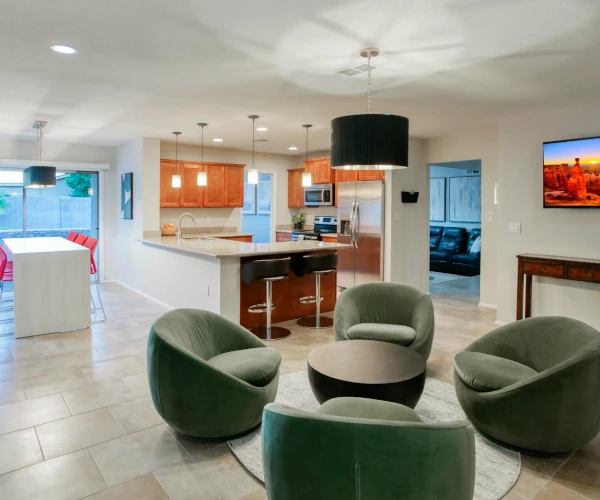
With never more than five residents at a time, your care is genuinely your own. Scottsdale’s quiet and natural beauty aren’t a bonus — they’re part of how healing happens here.

The Healing Difference of Home
What Makes Residential Treatment Different
Residential addiction treatment means you live at the facility for the duration of your program. Outpatient programs involve scheduled therapy sessions before returning home each day — the same environments, routines, and habits that often fuel addiction. Residential treatment surrounds you 24/7 with a community and a lifestyle built around recovery instead.
Opioid Addiction Often Begins With a Prescription
For many, it starts in a doctor’s office — a prescription for pain after an injury, a surgery, or a chronic condition. The medication works, and for a while, that’s all it is. But opioids are among the most addictive substances known, and what begins as legitimate pain management can quietly become something much harder to control. For others, it begins recreationally — and escalates faster than anyone expects.
Opioid dependence is not a failure of willpower. The brain changes in response to these drugs in ways that make stopping extraordinarily difficult without clinical support.
When opioids have taken hold, professional treatment isn’t a last resort. It’s the best path forward. Scottsdale Serenity is here when you’re ready.
How We Treat Opioid Addiction
Our residential opioid addiction treatment program in Scottsdale pairs evidence-based clinical therapy with whole-person wellness — because lasting recovery means healing the mind, the body, and the root causes that made opioids feel necessary in the first place.
Evidence-Based Therapies
Cognitive Behavioral Therapy (CBT)
Identify and rewire the thought patterns that drive opioid use, and build real coping skills for cravings and triggers.
EMDR Therapy
Address the unresolved trauma that so often sits underneath opioid addiction — using this clinically validated approach to healing.
Dialectical Behavior Therapy (DBT)
Build emotional regulation, distress tolerance, and mindfulness skills that reduce reliance on opioids and other substances as a way to cope.
Group Therapy
Share your story with others who truly get it. Facilitated group sessions build community, accountability, and connection in recovery.
Holistic Wellness
Yoga & Meditation
Restore balance and calm through mindful movement and meditation woven throughout your daily schedule.
Aquatic Sound Bowl Therapy
Immerse in soothing sound vibrations to promote relaxation, balance energy, and support emotional well-being.
Chiropractic Care
Chiropractic care addresses the physical side of recovery — something many programs overlook entirely.
Why Choose Scottsdale Serenity for Addiction Treatment?
Not all residential treatment programs are the same. Scottsdale Serenity is a private, intimate facility — limited to just five residents at a time — where every detail of your care is intentional. From our expert clinical team to our insurance-friendly admissions process, we’ve built an environment where serious recovery is not just possible, but expected.
Our Private Sanctuary is Built for Healing
Your PPO Plan Likely Covers Treatment
Our Expert Team — Ready to Help
Frequently Asked
Opioid Addiction Treatment Questions
You deserve clear, honest answers. Below are the questions we hear most often from people considering opioid addiction treatment in Scottsdale.
What is residential opioid addiction treatment, and how is it different from outpatient?
You live at the facility full-time, away from triggers and stress, with 24/7 clinical support — outpatient lets you go home each day but can’t match that level of focus or structure.
Residential opioid treatment means you live at the facility for the length of your program — removed from the triggers, stress, and environments that fuel opioid use. Residential follows a consistent daily rhythm that builds stability and routine, while outpatient offers more flexibility to keep up with work, family, and other responsibilities. For most people with moderate to severe opioid use disorder, residential provides the focused time and around-the-clock clinical support that outpatient simply can’t replicate.
What types of addiction do you treat at Scottsdale Serenity Rehab?
Opioids are our focus — fentanyl, heroin, oxycodone, and prescription painkillers — along with alcohol, benzos, stimulants, polysubstance use, and the mental health conditions and trauma underneath them.
We specialize in opioid addiction and treat the full range of substance use disorders, including alcohol, benzodiazepine, stimulant, prescription drug, and polysubstance addiction. We also address co-occurring conditions — depression and anxiety, PTSD and trauma, and bipolar disorder — with trauma-informed care for childhood trauma, domestic violence, sexual assault recovery, and complex PTSD.
How long is opioid addiction treatment?
Most people need at least 90 days for opioid addiction, though programs often begin at a 30-day minimum. Your plan is built around your needs.
Research from the National Institute on Drug Abuse shows that treatment lasting less than 90 days has limited effectiveness, and that longer stays are linked to better long-term outcomes. Residential care commonly starts at a 30-day minimum, with many people benefiting from 60–90 days or more — especially with opioid use disorder, complex trauma, or co-occurring conditions. We build an individualized plan based on your history, mental health needs, and personal goals.
What does a typical day in your program look like?
Structured but balanced — individual therapy, group sessions, evidence-based treatment, and holistic wellness, with time built in for rest and reflection.
Your day is thoughtfully structured to support healing while leaving room for rest and personal reflection. A consistent daily rhythm builds the stability and routine that opioid recovery depends on. Days include individual therapy, group sessions, and evidence-based modalities like CBT, DBT, and EMDR, along with holistic wellness such as yoga, meditation, and aquatic sound bowl therapy.
Do you treat co-occurring conditions like depression, anxiety, or PTSD?
Yes — we specialize in dual diagnosis treatment, addressing opioid addiction and mental health at the same time.
We specialize in dual diagnosis, and our integrated approach treats both conditions simultaneously — because addressing opioid use without treating the underlying mental health issues often leads back to relapse. Common co-occurring conditions we treat include depression and anxiety disorders, PTSD and complex trauma, bipolar disorder, borderline personality disorder, panic disorder, OCD, and self-harm behaviors.
What is trauma-informed care, and why does it matter?
It means your clinical team understands how past trauma drives addiction, and every part of your treatment is built around that — without judgment.
Trauma, environment, biology, and social pressures all shape how opioid use develops and how healing begins. Our program takes a personalized, trauma-informed approach so every person feels supported, understood, and safe. Your clinical team is trained to recognize how past trauma shapes behavior, and they tailor every part of treatment to meet you where you are.
What evidence-based therapies are included in treatment?
CBT, EMDR, DBT, Group Therapy, and EFT/TFT — a full clinical toolkit targeting thought patterns, trauma, emotional regulation, and peer support.
Our evidence-based therapies include Cognitive Behavioral Therapy (CBT) to transform negative thought patterns, EMDR to process and heal trauma, Dialectical Behavior Therapy (DBT) to build mindfulness and emotional regulation, Group Therapy for peer connection and support, and Emotional Freedom Technique (EFT) / Thought Field Therapy (TFT) to reduce stress and negative emotional patterns.
What holistic wellness options do you offer?
Yoga and meditation, art and music therapy, chiropractic care, and aquatic sound bowl therapy — treating the body and spirit alongside the mind.
Our holistic approaches include Yoga and Meditation to restore balance through mindful movement, Art and Music Therapy to express emotions through creative outlets, and Chiropractic Care to improve alignment, relieve pain, and support physical well-being. We also offer Aquatic Sound Bowl Therapy to promote relaxation and emotional balance — reaching the physical and emotional dimensions of recovery that clinical therapy alone doesn’t.
How many residents are in the program at one time?
Never more than five. That’s not a selling point — it’s a commitment to genuinely individualized care.
We intentionally limit our program to no more than five residents at a time. A smaller program means your clinical team actually knows you, your treatment plan is genuinely individualized, and you’re never just a number. It also means privacy is real, not a policy on paper.
Is my treatment completely confidential?
Yes — federally protected under HIPAA, and we cannot share anything about your treatment without your written consent, even with family members.
Your privacy is protected by federal HIPAA laws and additional addiction treatment confidentiality regulations. We cannot share any information about your treatment without your written consent, even with family members. Our facility is designed with privacy in mind, and we can discuss additional confidentiality measures if needed.
What are the accommodations like?
Private rooms, gourmet meals, resort-style outdoor spaces — a setting designed to support healing, not just house it.
Heal in comfort with resort-style accommodations featuring private rooms, gourmet meals, and beautiful outdoor spaces designed for reflection and renewal. Our Scottsdale location offers the calm, beauty, and discretion that real recovery deserves — because the environment you heal in matters as much as the treatment itself.
Does my insurance cover opioid addiction treatment?
Likely yes if you have a PPO plan. Verification is free, takes just minutes, and we handle it for you.
Coverage for opioid addiction treatment varies by provider, policy details, and the level of care needed. Our admissions specialists can help you understand what services and levels of care your insurance includes, any out-of-pocket costs such as deductibles or copays, in-network vs. out-of-network options, pre-authorization or referral requirements, and flexible payment options if additional support is needed.
How do I get started? What does the admissions process look like?
Call us anytime — 24/7 — and we’ll walk you through a confidential assessment. One conversation is all it takes to begin.
Our initial assessment is a confidential, comprehensive evaluation covering your personal history, substance use patterns and triggers, medical and mental health history, family and social support, and personal goals. Call us anytime at (480) 408-5923, 24 hours a day, 7 days a week, or submit the form on this page and we’ll call you back promptly. No automated systems. No judgment. Just a real person ready to help.
Can my family be involved in my treatment?
Yes — we offer structured family programs designed to repair relationships, improve communication, and build a lasting support system.
We offer several family involvement options to support your recovery. Our family programs help repair relationships, improve communication, and build a strong support system for everyone involved. We believe healing the family system is essential for long-term recovery.
What support is available after I leave residential treatment?
Alumni programs, peer support groups, ongoing check-ins, and a personalized aftercare plan built before you leave — so you’re never on your own.
We offer alumni programs, peer support groups, and ongoing check-ins to help you maintain your sobriety and build a fulfilling life after treatment. Discharge planning begins at intake — not at the end of your stay — so your transition out of residential is supported every step of the way.
The right moment is
right now.
You’ve fought opioids long enough on your own. Reaching out is the hardest step — and the most important one. Our admissions team answers every call personally, 24 hours a day, 7 days a week. No automated systems. No judgment. Just a real person ready to help you take the first step toward a life that isn’t run by opioids.